Admissions


Shaping a Greener Sky: How Egnatia Aviation Leads the Future of Sustainable Pilot Training
The aviation industry is in the midst of a transformation, defined by the challenges of emissions reduction, technological innovation, and sustainable development across every aspect of the aviation system.
In the face of increasing regulatory demands and stakeholder expectations, sustainability is moving from an aspirational goal to a business-critical focus.
The International Civil Aviation Organisation recently published the goal for the global aviation sector to achieve net-zero carbon emissions by 2050. Huge strides have already been made: in 2019, compared to 1990, the aviation industry had reduced its fuel use and CO₂ per RPK by 54%. But the path forward demands holistic change—and that includes pilot training.
Today, the role of the flight training provider is increasingly seen as pivotal in this transformation. Regulatory bodies like EASA are increasingly referring to ab-initio training providers as important stakeholders to drive emissions reductions. As emphasised in a study from Embry-Riddle Aeronautical University, flight schools play a decisive role in aviation sustainability.
These shifts are also closely linked to a generational change. Today’s Gen Z pilots are reshaping aviation, bringing with them values of environmental consciousness, digital fluency, and purpose-led career decisions. They’re entering a profession in flux—and demanding that their training reflect modern priorities.
Unsurprisingly, organisations such as Egnatia Aviation have redesigned their training offer into a next-generation integrated training curriculum. The curriculum seamlessly blends theoretical knowledge, flight hours, and simulator time into an efficient training programme that is optimised for quality, pace, and sustainability.
Confronting Sustainable Pilot Training’s Challenge
Pilot training might serve as the first building block, but it doesn’t come without its drawbacks. Current training practices and exercises mainly utilise fossil fuel-powered aircraft, and it’s reported that tens of thousands of training flights emit over two million tonnes of carbon into the atmosphere.
As per Boeing report, the global aviation industry will require 660,000 new pilots before 2044. Taking the conventional approach to meeting that demand would pose a new major problem entirely.
Recent studies have shown that a single hour of basic flight training emits around 73 kg of CO₂. While well over 30,000 CO₂t per year is also associated with national training programs, reducing the global aviation industry closer to net zero seems practically impossible with numbers like that floating around.
Fortunately, change is underway. Simulator-based instruction has been shown to cut emissions by up to 70%, while zero-emissions electric trainers like the Pipistrel Velis Electro offer clean, quiet flight hours. In trials using clean energy, these aircraft reduced carbon emissions by a staggering 99% per hour compared to fuel-based trainers.
Egnatia Aviation is proactively adapting to this landscape. Its sustainability efforts extend beyond fleet upgrades to include smarter scheduling, data-driven training models, and wellness-informed pilot development. By overcoming pilot training challenges, including stress management and balancing innovation with safety, training institutions can lead by example in the sustainability transition.
The Elixir Aircraft: A New Standard in Sustainable Pilot Training
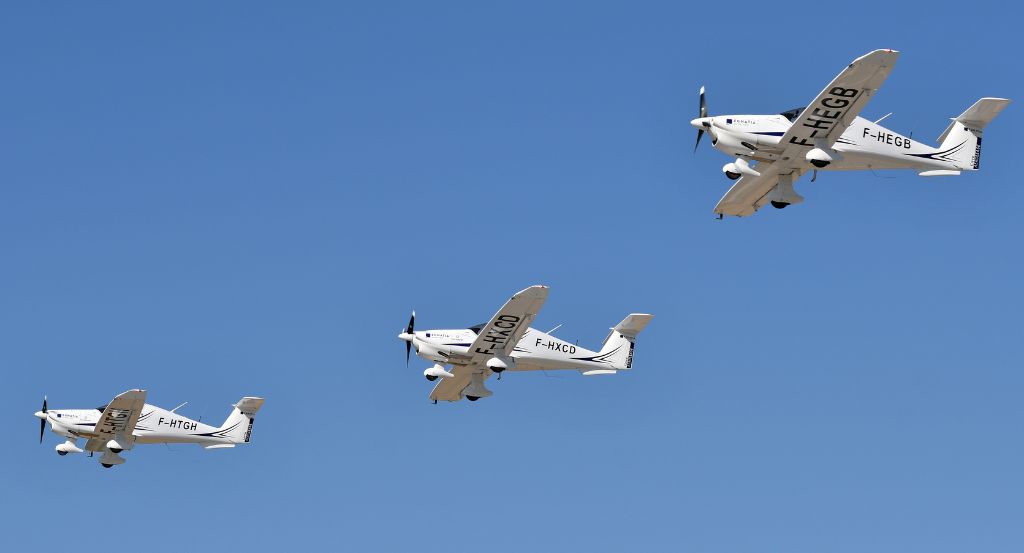
Modernising aircraft fleets represents a significant step toward sustainable training practices. The Elixir aircraft is made of carbon fibre and composite materials, combining operational efficiency, safety, and reduced environmental footprints. Its modern design serves as a technological and environmental benchmark, with its single-part wing contributing to unmatched safety standards, with reduced maintenance operations and costs.
The Elixir can reach a 70% reduction of CO₂ emissions compared to conventional single-engine trainers, demonstrating its fuel efficiency and environmentally friendly propulsive system. The Elixir has also received its Type Certificate under EASA CS-23 Amendment 5, which represents the most stringent current standards.
Thanks to its reduced power requirements, the Elixir lowers both fuel consumption and noise output. The aircraft’s glass cockpit system ensures training is aligned with modern airline standards. The deployment of a brand new fleet of Elixir aircraft reflects a comprehensive commitment to sustainability.
Digital Transformation Elevates Flight Training Efficiency
Sustainability is not restricted to aircraft. Progressive flight schools leverage digital solutions to enhance operational efficiency, minimise waste, and elevate the learning experience. E-learning platforms, for example, cut travel emissions and the need to consume paper.
More unlogged savings and efficiencies can be found in the EASA Guidelines on ‘paperless maintenance,’ which authorise real-time data logging and the introduction of predictive maintenance. Airlines that adopt predictive maintenance reduce operational inefficiencies and emissions—innovations that echo the digitally equipped training fleets.
Glass cockpits consolidate all critical flight information on a single display screen in a manner that is easy to comprehend, while automation in pilot training enhances fuel management precision. Even cultural tools, such as the impact of pilots’ training on social media, can help produce digitally competent, resourceful pilots primed for the aircrafts of tomorrow.
Human Sustainability: Nurturing Responsible Pilots
True sustainability in aviation is not just about hardware and systems—it’s about people. Modern training incorporates behavioral components such as eco-conscious decision-making and responsible risk assessment.
This begins with instilling values, as today’s trainees are tomorrow’s pilots who should be the leaders of sustainable air operations. Institutions participate in best practices regarding sustainability in pilot training, such as a voluntary eco-merit system.
Training in fuel efficiency and conservation can lead to lower fuel costs by $2 billion per year. Human adaptability remains central to progress—industry efforts like the #FlyNetZero campaign ensures that today’s cadets become tomorrow’s advocates for change.
Culture is equally critical. As air transport has always been able to work together to solve complex challenges and climate change is no different, flight academies must cultivate collaborative, reflective, and accountable mindsets.
Training also integrates soft skills. Airlines now seek soft skills in pilot training, including decision-making, leadership, and communication. Sustainable pilot training approach practices like fatigue management and mindfulness are seen as operational assets. Through a risk-centred training philosophy, cadets learn to make balanced, informed choices. Egnatia also supports diversity and communication through its immersive English training culture, empowering cadets from all backgrounds.
Egnatia Aviation’s Vision: Building a Sustainable Pilot Training Ecosystem
The aviation industry is entering an era of accelerated innovation and cooperation. Electric trainers like the Velis, which recently received the first type certification world-wide of a fully electric aircraft — are an important milestone in sustainable aviation.
Visionary training academies are planning accordingly, developing sustainable infrastructure at scale — energy-efficient campuses, on-site renewable energy, and digitalised logistics. These developments are not pursued in isolation. Through fuel efficiency and carbon reduction research, partnerships with airlines, tech innovators, and global bodies help push the boundaries of what pilot training can achieve.
In this future, academies aren’t merely producing pilots. They are nurturing the aviation leaders of tomorrow—responsible, skilled, and prepared to shape a greener sky.
- Other postsRead more news