Admissions


One Cockpit, Many Cultures: How Flight Training Prepares Pilots for Truly Global Crews

The contemporary airline cockpit is no longer defined by geography. Today, it is defined by convergence. Airline pilots routinely train and operate within global crews, sharing the flight deck with colleagues from different regions, regulatory backgrounds, and cultural traditions. Cadets from Europe, the Middle East, Asia, and Africa increasingly progress through training together, before entering airline environments where multicultural crews are standard rather than the exception.
This evolution is structural, not incidental. Long-term industry forecasts continue to highlight sustained global pilot demand, driving airlines to recruit internationally. ICAO’s work on global aviation workforce demand and Boeing’s pilot demand projections both underline the scale of this requirement. At the same time, airline operating models have become increasingly interconnected. Code-sharing, wet leasing, and multinational airline groups have reshaped how crews are rostered, a reality reflected in IATA’s assessment of globally interconnected airline operations.
In this environment, technical competence alone is insufficient. Flight training must also prepare pilots to operate effectively within diverse human systems. Cultural awareness, communication discipline, and adaptive teamwork are now integral to safe and professional airline operations.
Why Cultural Intelligence Is a Core Safety Competence for Airline Pilots
Cultural intelligence (CQ) refers to a pilot’s ability to recognise how cultural background influences communication, authority perception, and decision-making — and to adapt behaviour without compromising operational clarity or safety.
In practice, cultural factors shape:
- how instructions are delivered,
- how disagreement is expressed,
- and how readily concerns are raised.
In high-workload environments, these dynamics can either strengthen global crews’ performance or quietly erode it. Regulatory authorities explicitly acknowledge this risk. European guidance for Crew Resource Management requires training organisations to address cultural differences within global flight crews as a defined CRM element. The intent is clear: multinational cockpits introduce communication variables that must be managed deliberately, not left to chance. Comparable principles are reinforced in the FAA’s CRM training guidance, which places assertive communication and mutual monitoring at the centre of crew effectiveness.
Operational history further supports this emphasis. Numerous accident investigations have demonstrated that communication breakdowns and unchallenged decisions can be contributory factors in serious incidents. The NTSB report into Korean Air Flight 801 remains a reference point in CRM training because it illustrates how authority gradients and indirect communication can degrade situational awareness under pressure.
To counter these risks, the industry has formalised just culture principles that protect reporting and encourage constructive challenge. Within Europe, this is codified through occurrence reporting protections under Regulation (EU) No 376/2014. At a global level, ICAO positions just culture as foundational to safety management in its Safety Management Manual.
These frameworks align with airline recruitment realities, where communication discipline and adaptability increasingly influence selection outcomes. This is a trend reflected in the analysis of the soft skills airlines value in pilots.
Embedding the Global Cockpit Within the Training Environment
Preparing pilots for global crews requires training environments that reflect the operational reality of modern airline flying. One of the most effective methods is deliberate exposure to mixed-nationality crews during training, particularly in Multi-Crew Cooperation (MCC) and simulator sessions. When cadets from different regions train together, communication styles, leadership expectations, and decision-making habits surface naturally — creating learning opportunities that cannot be replicated in homogeneous groups.
At Egnatia Aviation, this philosophy underpins the airline pilot training approach, where technical instruction is integrated with crew interaction and operational realism. Mixed-nationality crew pairings are treated as a feature rather than a complication, allowing cadets to practise briefing, task sharing, and mutual monitoring in conditions that closely mirror airline operations.
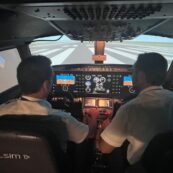
High-fidelity simulation plays a central role in this process. Advanced simulators allow instructors to introduce realistic operational pressures — time constraints, unexpected events, and workload spikes — while observing how crews exchange information and resolve ambiguity. This is why advanced flight simulator training is a core element in developing communication discipline alongside technical competence.
Language discipline is another essential dimension of the global cockpit. English is the operational language of international aviation, but safety depends on clarity and comprehension rather than accent uniformity. ICAO’s framework for language proficiency in international aviation emphasises intelligibility, interaction, and effective information exchange, reinforced by guidance on implementing language proficiency requirements under operational conditions.
In practical terms, cadets must learn to confirm, paraphrase, and clarify information rather than rely on assumed understanding. Egnatia Aviation’s guidance on English proficiency for airline pilots reflects this operational focus, framing language skills as safety tools rather than academic benchmarks.
The learning cycle is completed through structured debriefing. After simulator sessions, instructors and crews analyse not only technical outcomes but also communication flow and decision-making patterns. This approach aligns closely with EASA’s Threat and Error Management framework, embedding cultural awareness as an operational competence rather than abstract theory.
An International Training Hub for Airline-Ready Global Crews
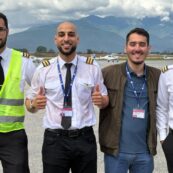
Training for global crews is easily achieved when training is itself a global experience. This is the natural environment of the international airline. At Egnatia Aviation, a truly multinational culture amongst training groups is not achieved by selective recruitment; Egnatia Aviation trainees and instructors are drawn from throughout Europe, the Middle-East, Africa, Asia and the Americas. The resulting training culture reflects what flight crew see on flight deck; the cultural and operational melting-pot of the global airline industry. This “instructional” culture is further reinforced by the cross-industry collaboration in pilot education, in which pilots are educated, thus ensuring ground-school instructional integrity with airline practices and processes.
Crucially, diversity is translated into learning through everyday training mechanisms rather than treated as a background characteristic. Group work, shared briefings, and mixed-nationality simulator pairings require cadets to plan, brief, and debrief together, accelerating skills such as clarification, respectful challenge, and the development of shared situational awareness. This approach aligns with regulatory expectations that require operators to address cultural differences within flight crews as a core element of Crew Resource Management, rather than leaving intercultural performance to experience alone.
Cultural nuance becomes particularly visible in simulator sessions delivered under Egnatia Aviation’s airline pilot training approach and supported by advanced flight simulator training. While participating in advanced fixed-base simulator exercises, the high workloads experienced allow instructors to observe patterns in cross-cultural communication or team dynamics, such as indirect challenges, open loop ends, and task allocation discrepancies. Thus, it becomes apparent where they can be highlighted during a structured debriefing with the use of recognised safety tools, including Threat and Error Management.
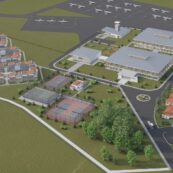
However, the application of such a standard with such a diverse group of trainees also requires that depth and consistency be achieved in providing the documentation, kinetic, and classroom instruction needed to meet the standard. Egnatia Aviation provides that context with the intentional attempt to build a dense network of well-trained instructors. It can do this because the courses are provided within the international operational environment of Kavala “Lydia” Aerodrome.
Building a Practical Cultural Toolkit for Future Pilots
For cadets learning to operate in international crews, cultural awareness is just as important in the cockpit as flight discipline. Effective listening treats ambiguity as a threat — as ICAO specifies in the Standards for language proficiency in Annex 1. Standard language is used unless such clarity requires plain English, and a question to seek clarification is never delayed or expressed with defensiveness.
Challenges must be explicit and respectful. Subtle requests can be misunderstood in another culture, too. That’s why CRM principles emphasised in FAA guidance on crew communication remain central to safe operations.
The best First Officers and future Captains build a professional mindset that looks to the future: I fly with people from everywhere; I adapt. This outlook is consistent with airlines’ expectations of their cadets, and is reinforced in Egnatia Aviation’s guidance on preparing for airline pilot training.
The safest global crews are those that practise turning diversity into clarity, as a matter of culture, communicated with discipline, respect, and an uncompromising dedication to shared standards.
- Other postsRead more news