Admissions


From Classroom to Cockpit Seat: Why MPL and Airline-Integrated Training Are Reshaping Pilot Careers

The structure of pilot training has evolved in parallel with the operational realities of modern airline flying.
As flight decks have become increasingly standardised, automation-driven, and procedurally dense, airlines have placed greater emphasis on training models that develop operational competence within a multi-crew environment from the earliest stages of instruction. Within this context, the Multi-Crew Pilot Licence (MPL) has emerged as a licensing framework designed to align pilot training more closely with airline operational requirements rather than generalised flight experience.
The MPL is grounded in ICAO’s competency-based training and assessment model as set out in Procedures for Air Navigation Services — Training (PANS-TRG, Doc 9868). Unlike the traditional ATPL pathway, which is primarily organised around flight-hour accumulation, MPL programmes are designed around defined performance outcomes—multi-crew cooperation, decision-making, communication, workload management, and procedural compliance—evaluated continuously against objective criteria.
For cadets, the practical consequence is direct: MPL is intended to develop the behaviours and discipline airlines assess in selection, type training, and line checks. In Europe, MPL sits within the framework described in EASA’s Easy Access Rules for Aircrew (Regulation (EU) No 1178/2011) and is supported by EASA’s competency-based direction, including Opinion 16/2016. The same “outcomes over inputs” logic is reflected in EASA ab-initio guidance, such as the ATP(A) Integrated Course Manual. Comparable regulatory alignment across several Middle Eastern aviation authorities has enabled airlines in the region to adopt MPL and airline-integrated pathways as part of long-term fleet and workforce planning, particularly where rapid network growth and highly standardised operations demand predictable pilot supply and early procedural alignment.
Replacing Generic Training with Airline-Integrated Models
Traditional pilot training — dominated by generic hours-based syllabi — has given way to a new generation of programmes that contain airline processes and practices throughout. This shift reflects a growing understanding by both industry and regulators that airline readiness — and thereby safety — comes from developing operational-level skills, not just from acquiring a license.
As a result, airlines are increasingly involved not only in syllabus design but also in candidate selection, using assessment frameworks that evaluate behavioural suitability, decision-making under pressure, and trainability within a multi-crew environment alongside technical aptitude.
A key driver is the movement of the industry to evidence-based training philosophy, which focuses on behaviour and decision-making, rather than simple completion of manoeuvres. The IATA Implementation Guide for Evidence-Based Training is a set of best practices designed to create training programmes based on the competencies that airlines care about most. This teaches how to train and assess threat and error management skills in complex, realistic scenarios.
Another integral component is formal crew resource management (CRM) training, which teaches pilots how to work effectively as a team under operational stress. EASA’s CRM training implementation guidance highlights the behavioural standards and instructional content that underpin multi-crew cooperation, while the CRM training syllabus offers a practical reference for integrating these behaviours into syllabus design.
At a regulatory level, EASA’s evolving approach to training and checking standards, as articulated in the Notice of Proposed Amendment NPA 2024-108, further reinforces the shift toward outcome-based competencies over fixed hours. This proposal outlines enhancements to training objectives, assessment criteria, and instructor qualification requirements that support airline-specific pathways.
Simulation also plays a foundational role in this transition. Modern CS-FSTD(A) flight simulation training devices permit high-fidelity replication of airline operations, enabling cadets to practise complex multi-crew scenarios with procedural fidelity that closely mirrors line environments. These simulators, certified under rigorous standards, allow integrated curricula to expose cadets to abnormal procedures, decision-making challenges, and multi-phase flight scenarios well before they reach a metal airframe.
Together, these elements illustrate the transformation from traditional hour-based training toward airline-specific pipelines designed around measurable, operational competencies — a shift that benefits both carriers seeking reliable first officers and cadets pursuing a clear progression into airline operations. Within these pipelines, the objective is to produce cadets who are both type-ready and culturally aligned with airline operating environments, reducing variability during type rating and initial line training.
Egnatia Aviation as a Multi-Authority Training Provider
Egnatia Aviation operates within this airline-integrated model by functioning as a long-term training partner rather than a stand-alone licensing provider. Its role is shaped by sustained airline collaboration, multi-authority regulatory approval, and programmes designed to reflect airline operational environments.
This approach is evident in its airline partnerships, with scheduled carriers such as Aegean Airlines and Iraqi Airways, which are established following comprehensive airline audits of facilities, instructors, simulators, and training systems. These partnerships allow training syllabi to be aligned with fleet types, airline procedures, CRM standards, regulatory requirements, and operational expectations, supporting smoother transitions from training to line operations. This alignment extends to checklist discipline and Quick Reference Handbook philosophy, ensuring that abnormal and non-normal procedures are trained in accordance with airline-specific operational logic.
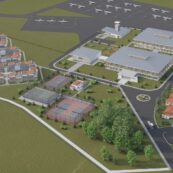
Regulatory alignment underpins this model. Egnatia operates under EASA oversight while also holding approvals from Middle Eastern authorities, enabling training delivery across multiple regulatory frameworks. This environment supports airline-integrated pathways for cadets targeting international carriers. Supporting infrastructure includes Lydia Aerodrome, developed as a dedicated training environment offering controlled airspace access, reduced congestion, and consistent training flow, with further context provided by aerodrome operations and the surrounding aviation ecosystem.
Beyond infrastructure, Egnatia places emphasis on competencies that airlines actively assess. This focus is reflected in how soft skills affect cockpit performance, how pilots are trained to manage risk during operational decision-making, and the core competencies expected of modern airline flight crew. These priorities align closely with MPL’s competency-based structure and with airline selection and training standards.
Understanding the Commitments of Integrated Pilot Programmes
For cadets, airline integrated programmes have advantages together, with increased demands. The key benefit is a clear training pathway. Integrated programmes are intended to deliver training that is directly relevant to airline operations, often covering type-specific training and airline-inspired assessment metrics. This clarity of destination mitigates some of the risk of the transition to line flying, and can also reduce the gap between licence issue and service entry.
In parallel, the training is more demanding. Progress is continuously assessed, and candidates are measured based on airline-grade performance benchmarks. Entry is typically competitive and carrier-controlled – reflecting the high level of operational performance required. As per the concepts in the Part-FCL framework, these competencies are not purely box-ticking compliance measures, but rely on a demonstrated level of performance rather than simply meeting a minimum level.
Finally, cadets must be mindful of licence limitations flow. Depending on the regulatory environment, an MPL may only be useable by a single airline, or may have limitations, or experience/training requirements around conversion. Factors such as compliance with ICAO language proficiency, and suitability for the intense training environment, should also be included in the calculation.
Egnatia supports informed decision-making through clear comparisons of training pathways, practical insight into the cadet routine within an airline-focused programme, and an overview of the broader requirements involved in becoming a pilot. These resources are intended to ensure cadets understand both the opportunities and the obligations associated with airline-integrated training.
The Long-Term Role of MPL in Airline Training
As the fidelity of simulation and training-by-competency continues to evolve, the supporting structures of the MPL and airline-integrated training will continue to mature. Regulatory structures around flight simulation devices and the introduction of type-specific evaluation standards like CS-FSTD(A) mean that flight operations can be increasingly well replicated in protocol and response.
Subsequent regulatory tuning, including proposed training updates, is in line with the broader approach to outcome-based training initiatives from a global coalition of stakeholders. Even ICAO’s most recent recommendations around advanced disciplines like upset recovery simply underscore the need for structured, real-world scenario-based training methods.
For airlines that have been running MPL programmes for several years, the benefits have included the ability to maintain training continuity, manage the flow of supply to job opportunities, and achieve the early integration of operational standards within their training programmes. This results in a compounding advantage for training productivity and line-readiness compared to airlines that must continue to wait for their licensees to meet their employment standards as they become available. For training organisations, long-term viability is increasingly tied to participation in a wider training system rather than just the issuance of the license. Egnatia Aviation, focusing on training sustainability and attention to future pilots, excels in this system-oriented training sector.
In this regard, MPL provides a flexible response to current operations. For cadets, it offers a pathway that demands commitment and performance, but offers structure, visibility and a chance for early operational relevance. For airlines, it more closely ties training outcomes to the unique requirements of modern-day flight deck operations. Together, these factors indicate that airline-integrated training, and MPL in particular, will continue to play a central role in shaping pilot careers.
- Other postsRead more news