Admissions


Campus, Aerodromes & Flight Training Infrastructure: What Pilot Cadets Should Consider
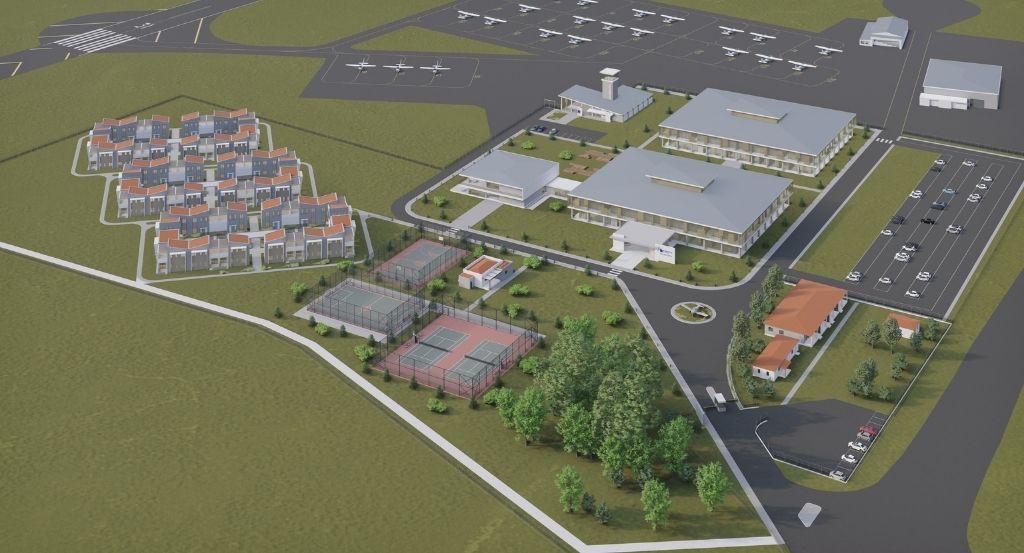
When selecting a flight training academy, cadets should assess more than syllabus structure, fleet size and licence pathway.
The quality of training is shaped by the environment in which it is delivered. Classrooms, briefing spaces, simulator availability, maintenance support, apron access, student transport, accommodation arrangements and the operational character of the aerodrome all influence how effectively training can be delivered over time.
This approach is consistent with the wider regulatory framework. Within the EASA system for approved training organisations, training quality is inseparable from an organisation’s ability to provide safe, standardised and effective instruction. EASA’s work on simulation standards also makes clear that device capabilities and fidelity levels must be matched to specific training objectives. Infrastructure, therefore, should be treated as part of training delivery itself.
For cadets, the consequences are practical. A well-organised environment supports punctuality, efficient transitions between theory and flight, consistent briefing routines and reliable access to training devices. A weaker environment can create avoidable disruption. This is why the operational realities and hidden challenges of pilot training and the wider framework of student life should be considered part of the training environment rather than adjacent to it. The relevant question for cadets is not simply where training is conducted, but whether the surrounding system has been designed to sustain performance over time.
Training Infrastructure That Supports Consistency and Standards
Facilities should be judged by function. The question is not whether an academy appears impressive, but whether its infrastructure supports disciplined theory instruction, effective briefing and debriefing, simulator access, efficient progression into flight operations and stable delivery across the programme. This sits within the broader framework of the technical requirements and administrative procedures related to civil aviation aircrew and ICAO’s emphasis on preparing current and future generations of aviation professionals through relevant and resilient training systems.
Within Egnatia Aviation’s training structure, classroom and briefing facilities are organised to support that progression. Pilot training is procedural and cumulative, which means the academic phase must connect directly to operational delivery. For that reason, the airline pilot training approach is built around the transition from classroom instruction to operational readiness, with briefing and debriefing forming part of the training discipline throughout.
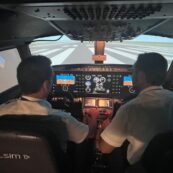
Simulation capability should be assessed in the same way. The presence of simulators alone is not enough; what matters is their suitability for the task. Egnatia Aviation’s use of advanced flight simulators and its published fleet profile point to an environment that combines aircraft and FNPT II-approved simulation capability across different phases of training.
The wider layout is equally relevant. A training environment should minimise unnecessary separation between briefing, operations, maintenance and aircraft access. At Egnatia Aviation, airport-based operational functions and city-based academic support form part of one structured system. The broader student life framework and the academy’s accreditations support the same conclusion: facilities should be evaluated by how effectively they support standards in practice.
Airport Movements as a Measure of Training Exposure
Aerodrome activity is not the only indicator of training quality, but it is a relevant one. A cadet training in an active environment is likely to encounter more frequent sequencing, radio work, circuit operations, departures, arrivals and ground coordination. ICAO’s material on operational management and stakeholder coordination, and its treatment of aerodrome operational services, equipment and installations, reinforce the importance of the aerodrome as an operational system.
Within Egnatia Aviation’s model, Lydia Aerodrome is central to that operational setting. As stated in our recent institutional update, Lydia recorded 30,183 movements in one year alone. That figure is significant because it reflects a genuinely active aerodrome environment in which cadets train within the daily rhythm of live operations. Our Lydia Aerodrome environment should therefore be understood not simply as a physical base, but as part of a coordinated training ecosystem that also includes our fleet, simulator capability and wider infrastructure development.
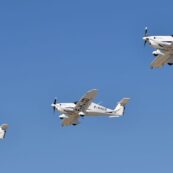
That environment is being strengthened further by continued growth. Egnatia Aviation has received six new Elixir aircraft, with six more to be added, while a new 3,500 sqm training building, terminal and mall is planned to become operational in 2026. At the same time, our participation in DEMOQUAS and HAIKU, together with our work in cross-industry collaboration, partnerships and big data in aviation training, reflects an environment defined not only by physical assets, but by institutional development, operational growth and the systems used to improve training delivery over time.
The Role of Accommodation and Student Support in Training Consistency
Accommodation should be viewed in operational terms. Intensive flight training requires punctuality, sufficient rest and an environment in which study can continue outside the flight line. Housing, transport and campus arrangement therefore affect scheduling reliability and day-to-day consistency.
At Egnatia Aviation, this is reflected in the structure of student life, where the cadet environment is treated as part of the training model rather than as a separate service. This is reinforced by the location-specific logic outlined in five reasons to train in Kavala, where geography and accessibility are considered in relation to the wider training setting.
The main point is practical. Cadets do not need excess; they need a setting that reduces avoidable disruption and supports the daily demands of theory, simulator sessions and flight operations. Training results are influenced not only by curriculum content, but also by the conditions surrounding daily study and flying.
Infrastructure as a Marker of Training Quality
For cadets, infrastructure should be treated as a meaningful indicator of academy quality. Facilities matter when they support disciplined theory delivery and briefing. Simulators matter when they are appropriate to the training task. Aerodrome activity matters when it provides genuine operational exposure. Accommodation and campus organisation matter when they support reliability throughout the programme.
Assessed against these criteria, Egnatia Aviation may be understood as an integrated training environment rather than a basic aggregation of classrooms and fleet assets. Its infrastructure combines modern aircraft, simulation capability and a structured progression from academic instruction to operational application, supported by a student framework designed to preserve continuity across the full cadet experience. The operational role of Lydia Aerodrome further strengthens that environment by embedding training within a live aviation setting. This is complemented by the academy’s accreditations, airline partnerships and broader partner ecosystem, all of which contribute to institutional credibility, while its engagement with cross-industry collaboration and the role of big data in aviation training signals a wider operational and strategic orientation. For aspiring cadets from Europe, the Middle East and beyond, this constitutes a training environment shaped by coherence, relevance and professional discipline
- Other postsRead more news