







For parents, airline pilot training is rarely evaluated as ambition alone.
It is assessed through sharper concerns: whether the profession is safe, whether the financial commitment is proportionate, whether the student can meet medical and academic standards, and whether the chosen academy can support a young person through sustained pressure. These concerns are legitimate. Aviation is a safety-critical profession, and the path into the cockpit must be examined with the same seriousness as the career itself.
The available data provides a measured basis for confidence. Commercial aviation safety is monitored continuously by organisations such as IATA and ICAO, while European commercial pilot preparation begins with the EASA Class 1 medical examination. Long-term workforce forecasts from Airbus and CAE also continue to show sustained demand for aviation professionals. The central question is therefore not whether the route is serious. It is whether the training environment is structured enough to justify parental trust.
The Real Airline Pilot Training Path: What Parents Should Expect at Every Stage
The route to the cockpit is a staged professional formation, not a collection of isolated flying lessons. It begins with eligibility, educational readiness, English-language competence, aptitude, and medical certification. Egnatia Aviation’s guidance on entry requirements for future cadets helps parents understand that the process begins with measurable suitability, not aspiration alone.
From there, the student moves through theoretical knowledge, simulator exposure, flight phases, procedural discipline, and crew-oriented development. Egnatia’s integrated path from training to airline readiness shows how these stages are designed to build competence progressively. Its holistic approach to pilot development also reflects a broader truth: a future pilot must develop judgement, discipline, communication, and resilience alongside technical skill.
Parents should expect periods of strain. Research into flight trainee stress shows that training pressure, career uncertainty, finances, and family expectations can all affect students. In practical terms, difficulty is not always evidence of failure. Often, it is evidence that the student is progressing through a demanding professional system.
Airline Pilot Training Costs: How to Budget, Compare, and Protect the Investment
The cost of airline pilot training should be assessed as a complete family investment, not a tuition figure alone. Parents need to account for training fees, accommodation, travel, living expenses, medical requirements, documents, visa procedures where relevant, and a sensible contingency for delays or additional training time. Egnatia’s discussion of pilot training as a long-term investment reflects the correct frame: this is a structured career decision, not a short educational purchase.
A sound financial plan begins with verification. Parents should ask what the course fee includes, what it excludes, how payments are scheduled, and what happens if training takes longer than expected. For students living in Greece, student accommodation in Kavala and visa guidance for international students become part of the real cost base.
The emotional management of money is equally important. A student who is reminded daily of the financial burden may begin to interpret every setback as a family loss. That pressure can undermine performance. The better approach is structured budgeting, clear expectations, and calm parental support.
Choosing the Right Flight School: The Questions That Matter
Parents should evaluate a flight school as a safety-critical organisation. The relevant questions are not cosmetic. Is the school fully approved? How experienced are the instructors? How is safety managed? What support exists when a student struggles? What facilities support consistent training? What evidence exists for graduate outcomes?
The EASA aircrew and medical framework provides the regulatory foundation, while guidance on how to choose the right flight school brings the decision into practical focus. Parents should also examine the operational environment behind the syllabus. Briefing rooms, aircraft availability, simulators, maintenance capability, accommodation, and transport all influence the student’s training continuity.
This is why infrastructure in a flight academy is not a secondary matter. A strong academy is not only a place where lessons are delivered. It is a system designed to sustain performance, safety, and progression over time.
Inside Pilot Training in Greece: Accommodation, Campus Life, and Support
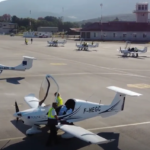
For international families, Greece is not simply the location of study. It becomes the student’s daily operating environment. Egnatia’s facilities at Lydia Aerodrome place training within a dedicated aviation setting, supported by classrooms, simulator facilities, maintenance, apron access, and an operational rhythm built around flying. The wider Lydia Aerodrome environment adds location-level credibility to that picture.
Parents should also understand the living structure around the cadet. Student life in Kavala matters because stability outside the cockpit affects performance inside it. Housing, transport, arrival support, local routine, and access to practical services all help a young person adapt to professional training away from home.
The presence of maintenance and ground support at Lydia also reinforces an important point. Support is not only emotional or administrative. In aviation, support is operational: facilities, systems, people, and processes working together to create a reliable training environment.
The Best Way to Stay Involved During Pilot Training as a Parent
Parental involvement should be steady, informed, and proportionate. Egnatia’s guidance for parents makes the fair point that each student has their own tutor, meaning the family alone is not enough support around the cadet. That counts. Parents should take an interest, but should be wary of turning into a second marking panel.
This caution is supported by wider evidence. An academic study into helicopter parenting found a clear link between overinvolvement and diminished mental health, while research on pilot mental health underpins the understanding that a professional atmosphere surrounding pilots should pay far more attention to the wellness of pilots as part of aviation professionalism. The function of the family is to encourage stability, not scrutiny.
Proven support is pragmatic. Ask what the student has learned, not only what score they achieved. Encourage seeking help from tutors and formal support. Avoid using money as a guilt lever. Finally, acknowledge the hidden challenges of pilot training; setbacks, fatigue, and confidence dips are all very common, even when the student is progressing well. The best parent maintains sensible proximity but is disciplined enough not to create any additional stress.
Career Outcomes: What Parents Should Expect After Graduation
Graduation is not the end of the process. It is the transition from academy training into airline assessment, recruitment, onboarding, type-specific preparation, and early professional development. Parents should therefore evaluate outcomes with both confidence and restraint.
Egnatia reports strong employment statistics after graduation, including a stated 95.7% employment rate within one year of graduation. That figure is important, but it should be understood correctly: it is a school-reported outcome, not a universal guarantee. The broader aviation market remains selective, even when long-term demand is strong.
This is why training quality matters. Airlines need technically competent, medically fit, procedurally disciplined, and behaviourally mature pilots. Egnatia’s work around CBTA and airline pilot readiness, global crew preparation, and time management during training reflects the wider competencies expected beyond the licence itself.
Ultimately, supporting a child through airline pilot training requires verification, planning, emotional discipline, and trust in the right training system. Parents should secure the medical and financial foundations early, examine the academy’s structure carefully, understand the living environment, and remain available without transferring anxiety to the student. When family support and academy systems work together, the cadet is better positioned to progress from first lesson to first officer with confidence and professionalism.